Research Log: Training Interruptions, Eval Debugging, and Manual Switching — Feb 9, 2026
1. Task Progress
1.1 Model Training
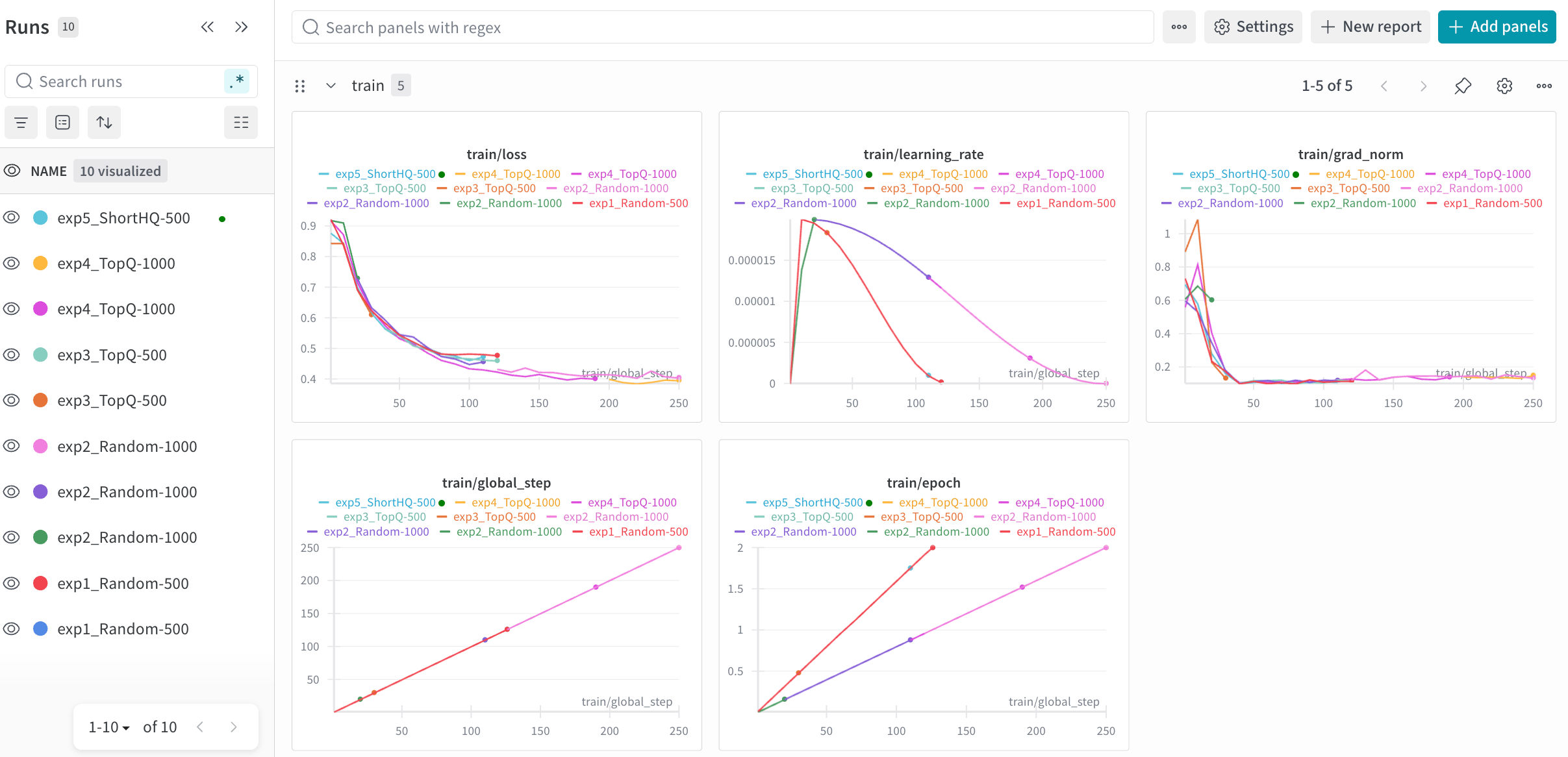
Model training was continued today, although the overall process was still affected by stability issues.
- Early this morning, the training job terminated unexpectedly, resulting in the loss of several GPU hours.
- During the daytime, the training process was interrupted once again. After a brief investigation and recovery, the training was able to resume.
- Despite these interruptions, the overall training progress is still moving forward, and no structural issues have been observed in the core training pipeline.
Based on the current observations, the primary challenge at this stage lies in the stability of long-running training jobs, rather than issues related to the model architecture or the dataset itself.
Today’s Training Progress
1.2 Evaluation Environment Setup
Today, work was also initiated on configuring the evaluation environment, with a focus on validating the execution of evaluation scripts.
- The basic evaluation environment has been successfully set up.
- However, many validation scripts are still failing to run correctly on the vCPU-based environment.
- Preliminary analysis suggests that these issues may be related to environment dependencies, resource constraints, or compatibility problems within the evaluation pipeline itself, and further investigation is required.
Overall, the evaluation setup is still in the debugging and validation phase, and additional effort is needed before it becomes stable and reusable.
1.3 Model Deployment
Compared to the training and evaluation components, progress on the model deployment side has been relatively smooth.
- The model loading and serving pipeline is now largely functional.
- No significant stability issues have been observed so far, providing a solid foundation for subsequent multi-model switching and evaluation tasks.
2. Next Steps and Plan Adjustment
After reassessing the system stability, an adjustment was made to the original model switching strategy.
- The initial plan was to automate model switching via SSH scripts. However, this approach was deemed potentially unstable in practice, especially under long-running workloads and frequent switching scenarios.
- As a result, the decision was made to temporarily abandon full automation and adopt a manual model switching approach to reduce operational risk.
Planned actions:
- Allocate a dedicated daytime window to perform model switching manually;
- Monitor the system behavior closely during the switching process to ensure that model loading, execution, and evaluation remain under control;
- Re-evaluate the feasibility of reintroducing an automated switching mechanism once the manual workflow has proven to be stable.